Liebherr Refrigerator Error Code BT011
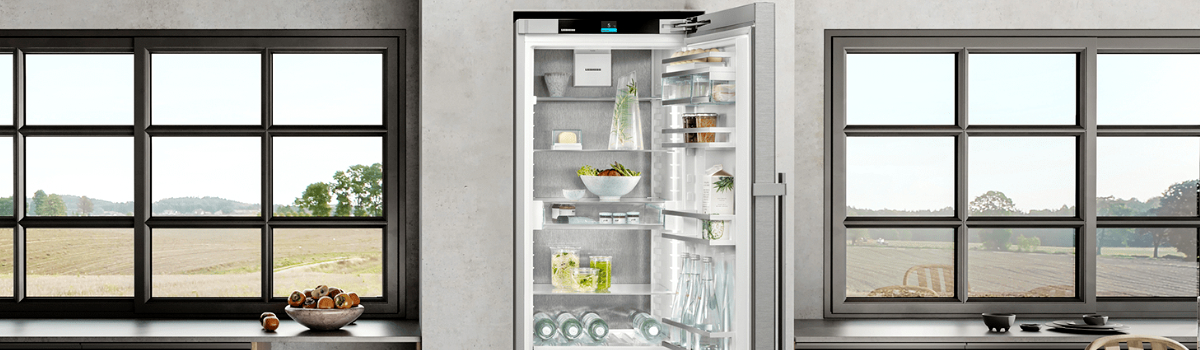
When a Liebherr refrigerator shows error code BT011, it’s telling you there’s a problem with the air temperature sensor in the fresh food compartment. That small sensor constantly reads the air temperature and tells the control board when to run the compressor and fans. If the reading looks wrong, missing, or outside the normal range, the control board throws BT011 to warn you that it can’t trust the sensor anymore.
Because of this, the fridge may cool unevenly, run longer than usual, or let food sit at the wrong temperature even though the display looks “normal.” In other words, BT011 is not just a cosmetic error — it’s a hint that the refrigerator can’t control temperature properly and needs attention.
What You’ll Usually Notice With BT011
Error BT011 can show up in different ways. Sometimes the code appears right away on the display; sometimes you feel that the fridge is “off” and only then see the error.
Typical signs include:
- BT011 or a related alarm on the control panel
- Fresh food section warmer than usual while the freezer seems okay
- Cold zones at the back and warmer zones near the door
- The refrigerator running almost non-stop
- Food spoiling faster than before or drinks never getting really cold
If you see the code and recognize one or more of these symptoms, it’s very likely the refrigerator air sensor really is the problem – not just a software glitch.
Why BT011 Happens
In most cases, BT011 comes from one of a few root issues. The sensor itself can fail with age. Wires or connectors between the sensor and the control board can get damaged, pinched or corroded. Excess moisture or ice behind the inner panels can throw off readings. Less often, the control board misreads a good sensor, especially after a surge or outage.
From the user’s point of view, the story is simple:
the fridge stops “understanding” the true air temperature in the fresh food compartment, so it can’t control cooling correctly and triggers Liebherr refrigerator error code BT011 to warn you.
Safe Things You Can Check Yourself
You don’t need special tools to do a few basic checks. Just keep safety in mind and unplug the refrigerator if you’re doing anything more than opening doors and adjusting settings.
- Compare real temperature to the display.
Put a simple fridge thermometer (or a small glass of water with a thermometer) on the middle shelf. Give it a few hours with normal use. If the display says about 37°F but the thermometer is much warmer or colder, the control board is likely getting bad temperature information. - Look at loading and airflow.
Overpacked shelves and containers pushed tight against the back wall can trap cold air and confuse the sensor. Try to leave space around vents and the rear wall so air can actually move. A badly loaded fridge won’t create BT011, but it can make the temperature control look worse. - Check door seals and closing.
If the gasket is twisted, cracked, or dirty, warm, humid air can sneak in and make the system work harder. Run your hand around the edges and look for obvious gaps. Make sure nothing on the shelves is blocking the door from closing fully. - Do a simple power reset.
Turn the fridge off, unplug it for 5–10 minutes, then plug it back in and set your normal temperatures. A reset won’t fix a broken sensor, but it can clear a one-time error if the signal briefly went out of range. If BT011 comes back quickly, the fault is still active.
If these simple steps don’t change behavior or the error returns soon, the problem is deeper than loading or settings.
What a Technician Usually Does for BT011
Once basic checks are done, BT011 is mostly a sensor/electronics job. A trained tech will remove inner panels, locate the air sensor in the fresh food compartment, and measure its resistance against the expected values for that temperature. They’ll also inspect the wiring harness and connectors for damage or corrosion, and verify the readings at the control board.
If the sensor is out of spec, it’s replaced and the wiring is secured so it won’t rub or pinch again. If the sensor checks out but the signals are wrong at the board, the technician will look at the control module itself and decide whether repair or replacement makes more sense. After that, they reassemble the unit, set realistic temperatures (usually around 37°F in the fridge and 0°F in the freezer), and confirm that Liebherr error code BT011 clears and does not come back.
Preventing Sensor Problems in the Future
You can’t control every electronic failure, but a few habits help reduce stress on the sensors and control system over time:
- Avoid blocking vents or pushing food tight against the back wall; keep some air space around shelves.
- Fix door seal issues early so you don’t get constant condensation and ice where wiring and sensors live.
- Don’t use undersized extension cords or overload the outlet; steady power is easier on the control electronics.
- In areas with frequent outages or surges, consider surge protection so the board and sensors aren’t hit every storm.
If your Liebherr refrigerator keeps showing BT011, temperatures won’t stabilize, or you’re worried about food safety, it’s usually faster and cheaper long-term to let a specialist handle it.