Why does the temperature in my Liebherr fridge keep going up and down?
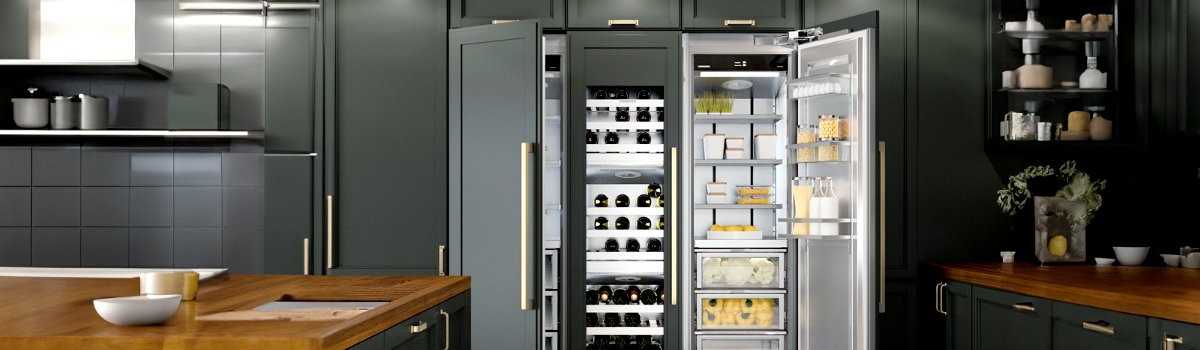
If you’ve started watching the display or a little fridge thermometer, it can be really stressful to see the temperature in your Liebherr jump from 35°F to 42°F and back again. Is the fridge dying? Is the food still safe? Do you already need a new compressor?
- Small swings are normal in any modern, frost-free refrigerator.
- Big, constant swings (especially with food spoiling or ice building up) usually mean there’s a real problem you can track down.
This guide is written in normal, human language and walks you through:
- What “normal” temperature changes look like
- The most common reasons a Liebherr fridge can’t hold a steady temp
- DIY checks and fixes you can do safely at home
- Simple prevention habits so this doesn’t keep coming back
First question: are the temperature swings actually “normal”?
Before you panic, it helps to understand how your Liebherr is supposed to work.
Modern fridges don’t hold one exact number 24/7. The compressor turns on, cools the cabinet down, then turns off. While it’s off, the air inside slowly warms back up until the thermostat or sensor tells the compressor to start again. That built-in on/off control always creates a small up-and-down pattern.
The air temperature in the fridge changes faster than the actual food temperature. A cheap thermometer clipped to a shelf is reading mostly air, not the core of your milk or leftovers.
So what’s usually normal?
A slow swing of a few degrees (for example, 35–41°F) over a cycle. Short bump warmer when you open the door, then a recovery within 15–30 minutes. Temporary rise during an automatic defrost cycle, especially in NoFrost models.
What isn’t normal:
- Readings all over the place, like 33°F in the morning and 48°F in the afternoon
- Food on one shelf freezing while food on another shelf feels warm
- The display saying one number while your thermometer shows something totally different
If that sounds like your situation, keep reading – you probably have one of the issues below.
Everyday habits that make your Liebherr’s temperature jump
Let’s start with the simple, non-technical stuff. A lot of temperature problems come from how the fridge is used, not from broken parts.
Door openings and loading habits
Every time you open the door, warm room air rushes in. If the door is held open for a while (kids staring into the fridge, cooking prep, putting away a big grocery haul), the air temperature in the cabinet can spike quickly.
Common habits that make things worse:
Frequently opening the door just for one item. Leaving the door slightly cracked because a container is sticking out. Putting large warm pots or hot leftovers straight inside. Storing a lot of food right against the back wall, so cold air can’t circulate.
Try this for a few days:
- Grab what you need in one or two trips, not ten
- Let hot food cool on the counter first
- Make sure nothing is blocking the door from closing 100%
If the swings calm down, you’ve already found your main “problem.”
Wrong temperature setting or special Liebherr modes
On Liebherr models, different modes and settings can intentionally change how the fridge behaves. The brand itself points out that the set temperature, door use, and ambient temperature all affect how warm or cold the interior runs.
Things to double-check:
Is the fridge actually set cold enough?
For most Liebherr fridges, around 37–40°F (3–4°C) is a good everyday setting.
SuperCool / SuperFrost
These “turbo” modes temporarily make the unit work harder when you load a lot of fresh food. If you never use them, the fridge can run warm right after a big grocery trip. If you leave them on too long, the cabinet may overcool in some spots and then overshoot when it recovers.
Holiday / energy-saving modes (on some models)
These can allow the fridge to drift a bit warmer to save energy.
If your temperature swings seem tied to when you shop or change settings, reset everything:
- Set the main fridge temp to about 37–39°F.
- Turn off any special or holiday modes.
- Use SuperCool when you’re loading in a lot of warm groceries, then let it time out automatically.
Give the unit 24 hours with stable settings before judging the result.
Airflow: blocked vents, crammed shelves, and uneven cooling
Liebherr fridges rely on constant airflow between the evaporator (where cold is made) and the shelves where your food sits. If vents are blocked, some areas get very cold while others barely cool at all.
Many service guides and repair articles point out that blocked vents or overfilling is one of the most common causes of temperature fluctuations.
Signs you have an airflow problem:
- Certain spots (like the back or bottom) are freezing food
- The front of the shelves feels warmer than the back
- The fridge looks “stuffed” wall-to-wall with containers
Quick DIY check:
Find the air vents at the back or top of the fridge section (sometimes also between freezer and fridge). Make sure no large containers, boxes, or bags are directly in front of them. Aim for some gaps between items so air can move around each shelf.
If you move just a few things and suddenly everything starts feeling more even, that was your culprit.
Dirty condenser coils and poor ventilation around the cabinet
Your Liebherr can only keep the inside cold if it can push heat out the back or the bottom. When the condenser coils and the area around them are covered in dust, pet hair, or kitchen grease, the fridge has to work much harder and the temperature inside becomes less stable.
What to look for: The back of the fridge feels very hot. The compressor runs for very long cycles.. You haven’t cleaned the coils in years (or ever.)
Safe DIY cleaning:
- Unplug the fridge.
- Gently pull it away from the wall.
- Find the coils (rear panel or under the unit).
- Use a vacuum with a brush attachment and a soft coil brush if you have one.
- Make sure there’s at least a couple of inches of space behind and above the fridge for airflow.
After cleaning, give it a full day. If the temperature swings are smaller and the compressor sounds more “normal,” you just boosted its cooling efficiency.
Door gaskets: tiny gaps, big temperature problems
Liebherr’s own FAQ mentions that doors not closing properly and poor ventilation can make the interior too warm.
Simple checks:
Close a thin piece of paper or a receipt in the door and pull gently. It should have some resistance all the way around. Look from the side: do you see any visible gaps between gasket and cabinet when the door is closed? Clean the gaskets with warm, soapy water and a soft cloth; wipe dry.
If the gasket is physically damaged or doesn’t touch the cabinet in places, it usually needs to be replaced.
Frost and ice buildup around the evaporator (NoFrost issues)
On Liebherr NoFrost units, you normally don’t see thick frost, because the system runs automatic defrost cycles. But when something goes wrong, ice can build up behind the rear wall around the evaporator. That chokes airflow and causes warm spots, alarms, and wild temperature readings.
Typical symptoms: The fridge or freezer gets warm, then cold again, then warm. You hear the fan getting louder or “rubbing” on ice (or you don’t hear it at all). You see frost or ice sheets on the back wall.
A careful manual defrost can temporarily reset things:
- Unplug the fridge.
- Empty the affected compartment (save food in coolers if possible).
- Leave doors open for 5–24 hours so the internal ice can melt fully.
- Put towels around the base – you will get water.
- Plug back in and let the unit cool for 3–8 hours.
If the temperature behaves for a while and then the same problem returns, that usually points to a defrost system issue (heater, sensor/thermistor, or control board) that needs a technician.
Fans, sensors, and control boards – when parts start to fail
If you’ve cleaned, rearranged, and checked all the simple stuff, but the temperature still goes up and down too much, you might be dealing with a component failure.
Common trouble spots in Liebherr units mentioned by techs and repair forums:
Evaporator fan motor – if this fan stops or is blocked by ice, cold air doesn’t reach the fridge compartment properly.
Temperature sensors (thermistors) – a faulty sensor can send wrong readings to the control board, so the fridge cools too much or not enough.
Control board / electronics – rare, but possible, especially if you see strange display behavior along with temperature issues.
What you can safely do yourself:
- Listen for the evaporator fan when the door switch is pressed (on some models, the fan stops when the door is open, so you may need to simulate a closed door).
- Check for error codes on the display and look them up in the manual or online.
- Power-cycle the fridge (unplug, wait 5–10 minutes, plug back in) to clear minor glitches.
If the fan is silent, the display shows strange symbols or dashes, or an error code won’t clear, that’s a good time to stop guessing and call a Liebherr-trained technician.
DIY checklist: stabilize your Liebherr’s temperature step by step
Here’s a simple sequence you can follow before paying for service:
Confirm what you’re measuring: Use a decent fridge thermometer placed in the middle shelf, not stuck against the back wall. Check readings at the same times each day (for example, morning and evening).
Reset settings: Set fridge to about 37–39°F. Turn off holiday/eco modes.
Tidy the interior: Clear vents and the back wall. Don’t pack every inch of space; leave air gaps.
Fix your door habits: Open the door less often and for shorter periods. Make sure the door closes fully every time – no containers blocking it.
Clean the door seals and check for gaps: Wash gaskets, do the paper test, look for cracks.
Clean coils and improve external airflow: Unplug, pull forward, vacuum coils, and make sure there’s space behind and above.
Defrost if you suspect hidden ice: If there’s frost on the back wall or fan noise changes, do a full manual defrost.
If after all this your temperature is still jumping around in a big way, the problem is likely in the fan, sensors, or control electronics – not something you can safely fix without tools and training.
Simple habits to prevent temperature swings in the future
Once you’ve stabilized everything, a few small routines go a long way:
- Keep the ambient room temperature reasonable and don’t park the fridge right next to an oven or radiator.
- Clean condenser coils every 6–12 months.
- Wipe and inspect gaskets regularly.
- Use SuperCool when loading warm groceries, then let it turn off automatically.
- Avoid stuffing shelves so full that nothing can breathe.
Do these, and your Liebherr should be able to hold a steady, safe temperature without you obsessing over the display or thermometer all day.